Creamy Salmon Pasta

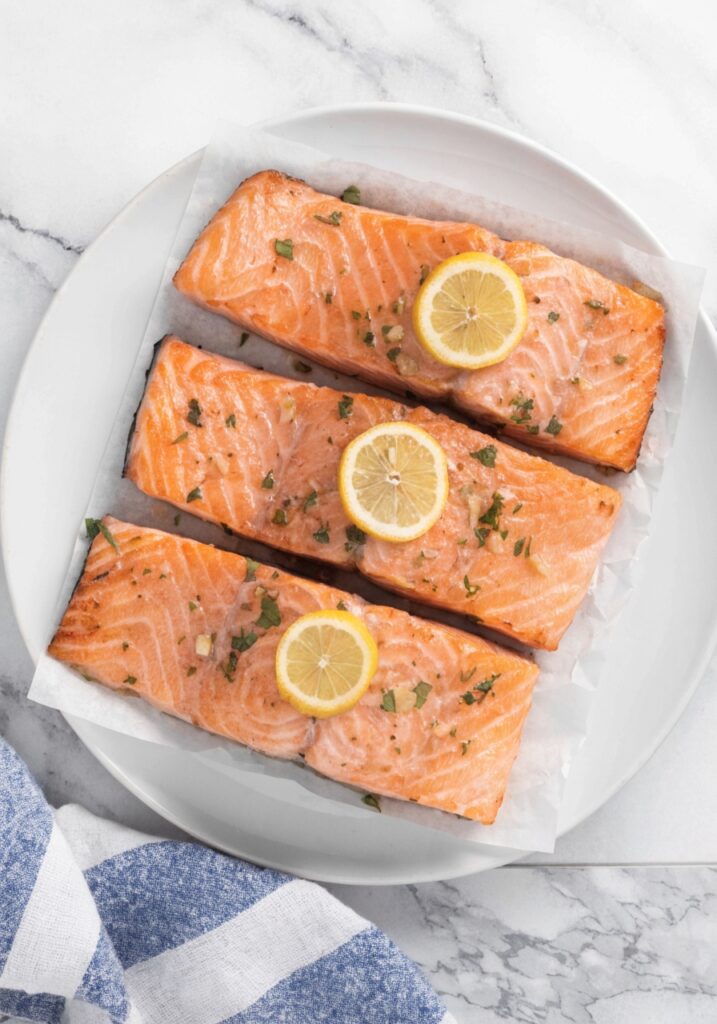
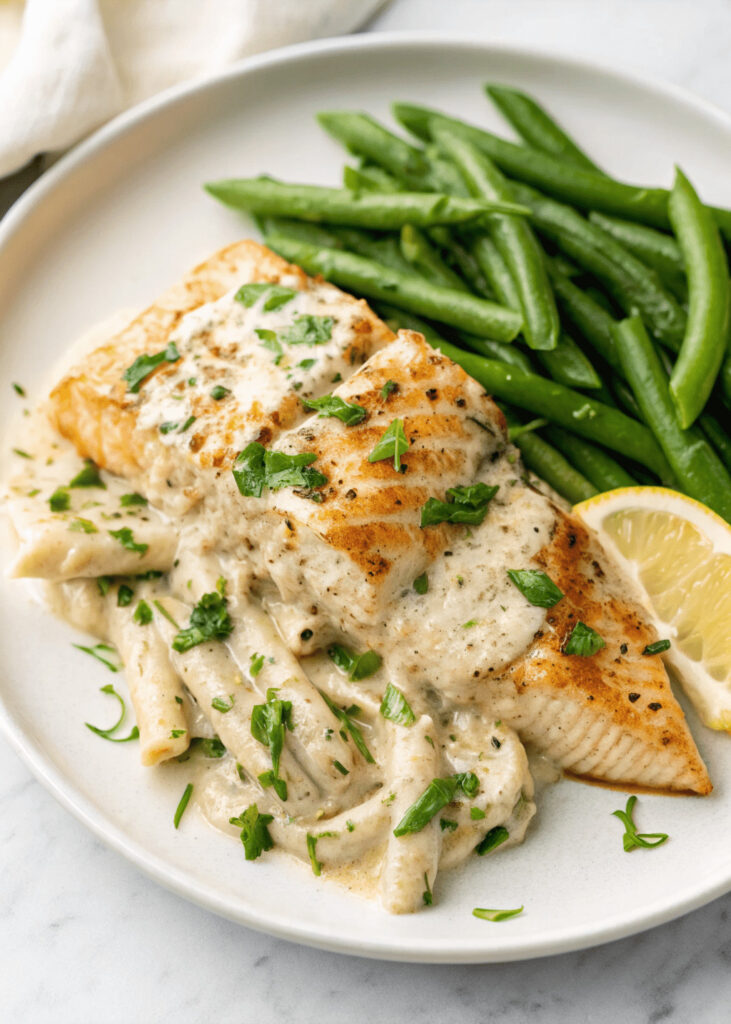
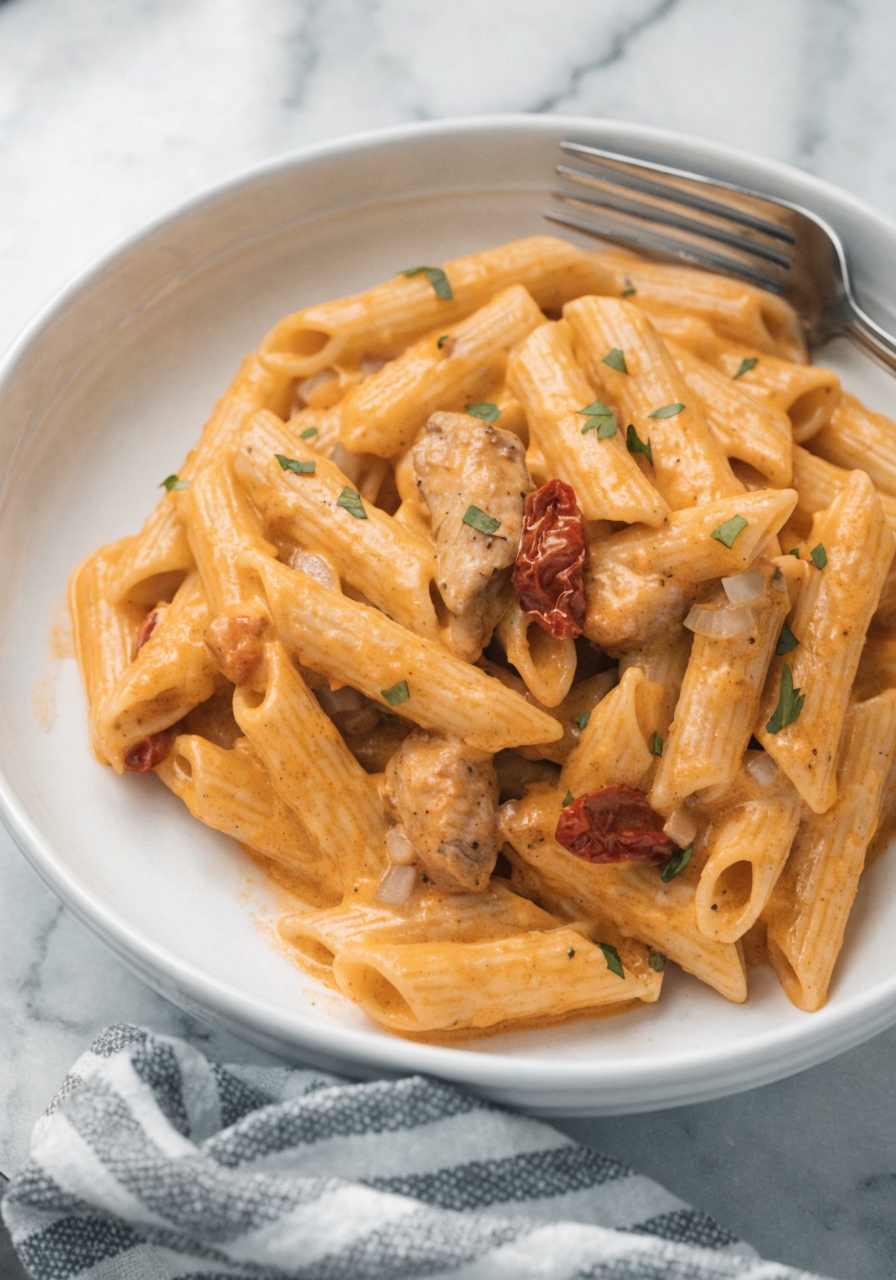
Creamy Salmon Pasta is a comforting, flavorful dish made by combining tender pieces of salmon with cooked pasta and a smooth, creamy sauce. The sauce is usually made with simple ingredients like cream, butter, garlic, and cheese, which coat every strand of pasta and every bite of salmon. It’s a meal that feels fancy, like something you might order at a restaurant, but it’s actually easy enough to make at home even on a busy weeknight.
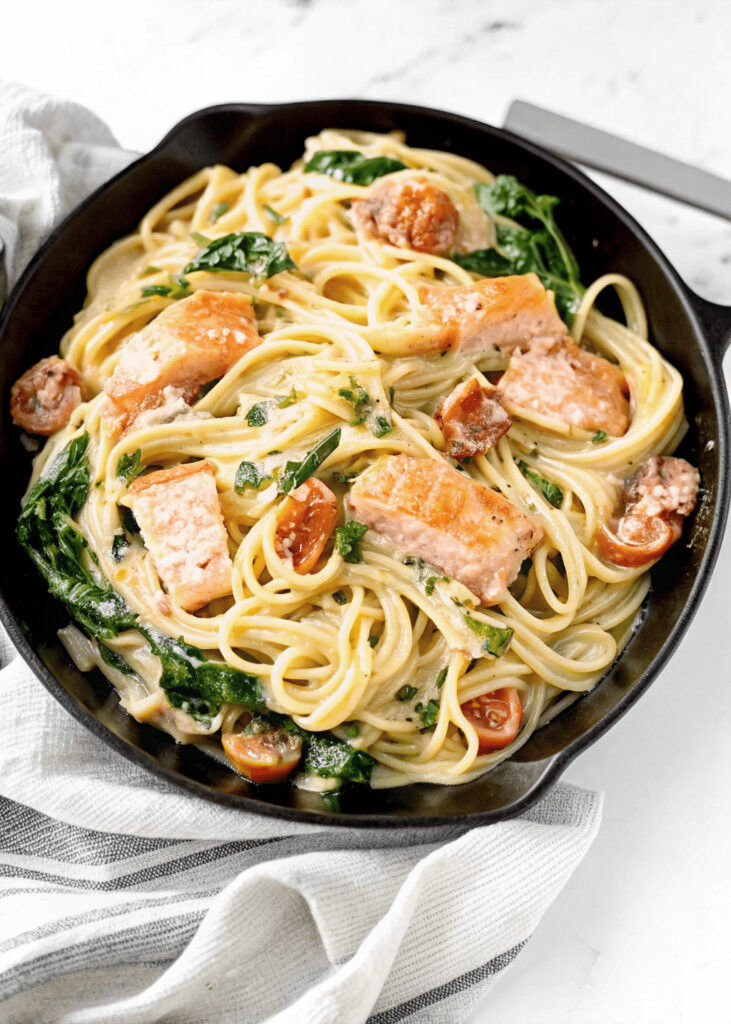
This dish is also a great way to enjoy salmon, which is a healthy fish packed with protein and good fats. When mixed with pasta and a creamy sauce, the salmon becomes mild and delicious, making it kid-friendly too. Creamy Salmon Pasta is warm, filling, and perfect for lunch or dinner when you want something cozy and satisfying.
You Should Try Creamy Salmon Pasta
Creamy Salmon Pasta is a recipe worth trying because it balances comfort and nutrition in one bowl. You get the richness of a creamy sauce, the softness of pasta, and the flaky texture of salmon all together. It’s also very flexible you can add vegetables, use different pasta shapes, or adjust the seasonings to match your taste.
Another great reason to try this recipe is that it doesn’t require complicated cooking skills. The steps are simple, and the ingredients are easy to find. If you’re cooking with kids or teaching a beginner how to cook, this is a wonderful recipe to start with. Plus, it comes together fairly quickly, so you won’t be stuck in the kitchen for hours.
Table of Contents
Ingredients for Creamy Salmon Pasta
Here’s everything you’ll need to make this Creamy Salmon Pasta:
- Pasta such as fettuccine, penne, or spaghetti
- Fresh salmon fillets skinless is easiest
- Olive oil or butter
- Garlic cloves, minced
- Heavy cream or cooking cream
- Grated Parmesan cheese
- Salt
- Black pepper
- Dried or fresh herbs like parsley or dill
- Optional vegetables spinach, peas, or broccoli
How to Make Creamy Salmon Pasta
Step One
Start by bringing a large pot of water to a boil. Add a pinch of salt to the water, then cook the pasta according to the package instructions. Stir the pasta once or twice so it doesn’t stick together. When the pasta is cooked until tender, drain it in a colander and set it aside. Try to save a small cup of the pasta water, as it can help thin the sauce later if needed.
Step Two
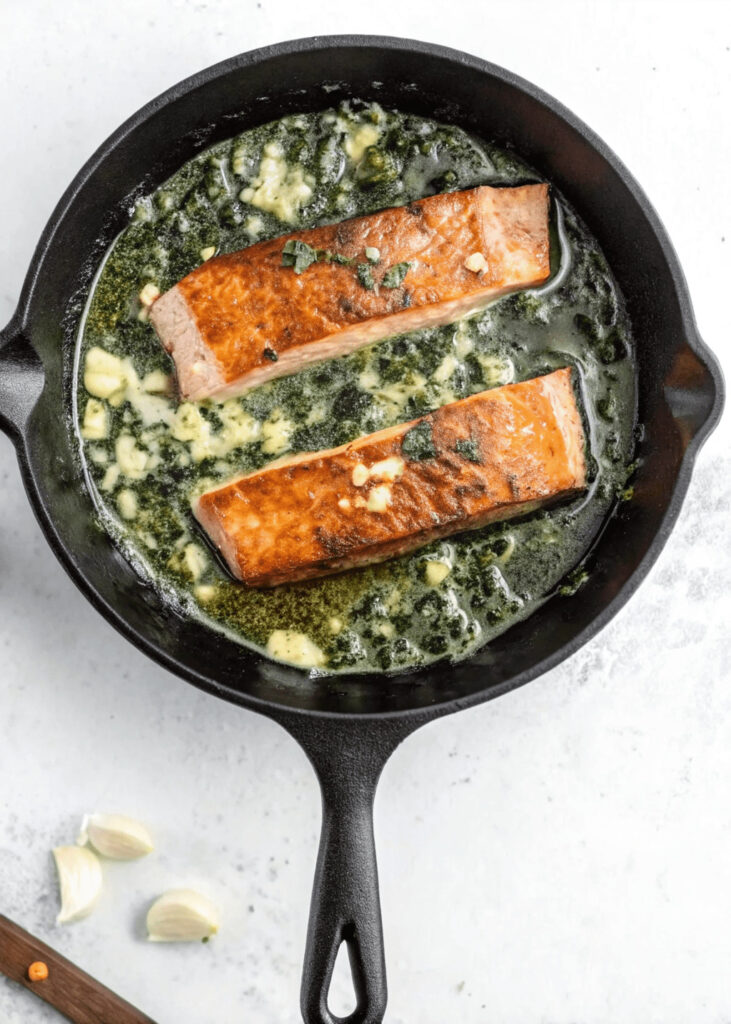
While the pasta is cooking, prepare the salmon. Cut the salmon into medium-sized pieces so they cook evenly. Heat olive oil or butter in a large skillet over medium heat. Carefully place the salmon pieces in the pan and cook them gently, turning once, until they are lightly golden on the outside and flaky on the inside. This usually takes just a few minutes per side. Once cooked, remove the salmon from the pan and set it aside on a plate.
Step Three
In the same skillet, add a little more butter or oil if needed, then add the minced garlic. Cook the garlic for a short time, stirring often, until it smells fragrant but not burned. Slowly pour in the cream and stir gently. Let the sauce simmer for a few minutes so it thickens slightly and becomes smooth.
Step Four
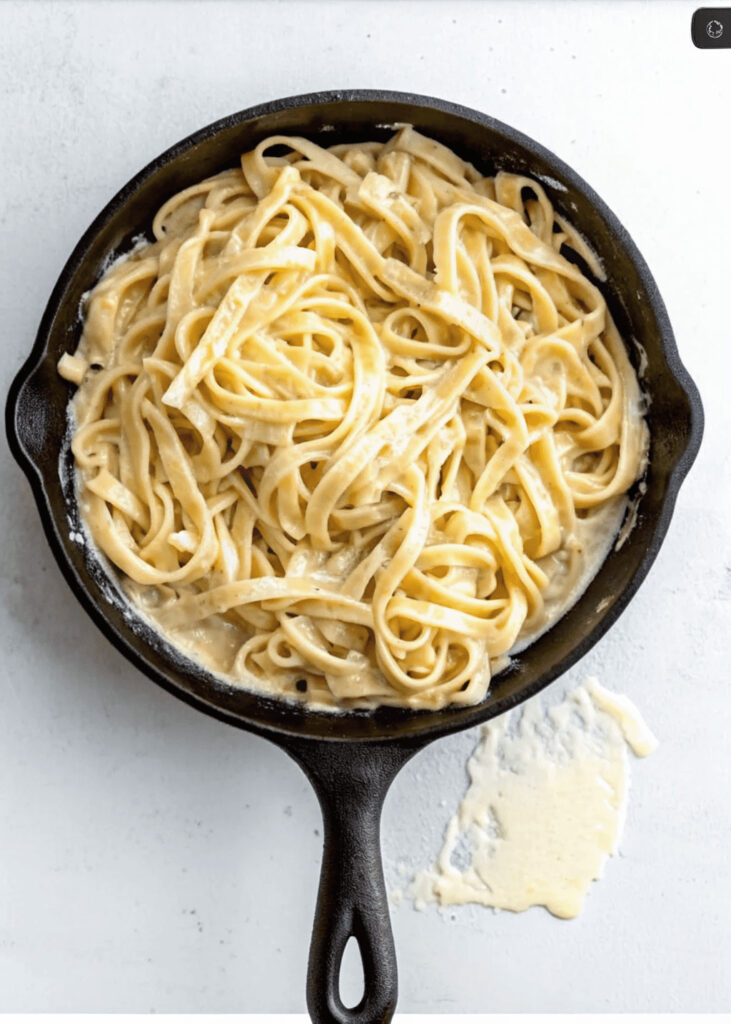
Next, add the grated Parmesan cheese to the sauce. Stir until the cheese melts completely, making the sauce creamy and rich. Season with salt and black pepper. If the sauce feels too thick, add a splash of the reserved pasta water and stir until it reaches the consistency you like.
Step Five
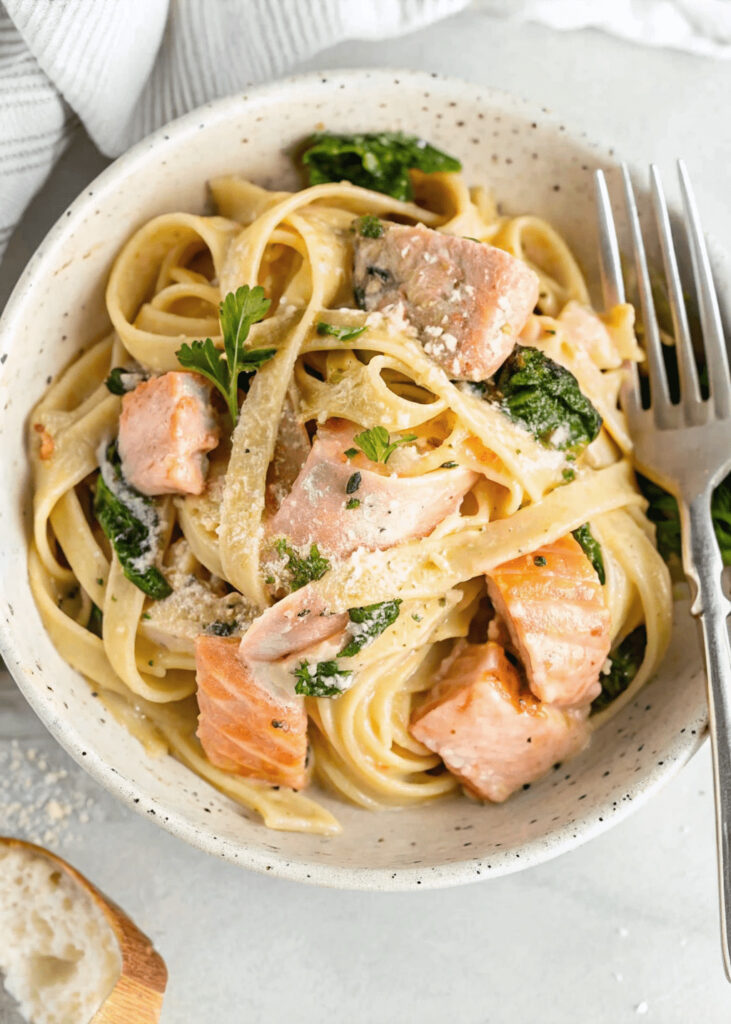
Now, gently return the cooked salmon to the skillet. Add the drained pasta and toss everything together carefully so the salmon stays in chunks and doesn’t break apart too much. If you’re using vegetables like spinach or peas, add them now and cook for another minute or two until they’re tender.
Step Six
Finally, sprinkle fresh herbs over the top and give everything one last gentle stir. Taste and adjust the seasoning if needed. Your Creamy Salmon Pasta is now ready to serve warm and enjoy.
Kitchen Equipment Needed :
To make this Recipe, you’ll need:
- Large pot for boiling pasta
- Large skillet or frying pan
- Wooden spoon or spatula
- Sharp knife
- Cutting board
- Measuring cups and spoons
- Colander to drain pasta
Tips for the Best Creamy Salmon Pasta
One helpful tip is to cook the pasta while you prepare the sauce and salmon. This saves time and makes the whole process faster. You can also cut the salmon into pieces ahead of time and store it in the fridge until you’re ready to cook.
If you don’t have heavy cream, you can use half-and-half or even milk, though the sauce will be lighter. Adding a little extra cheese can help thicken it. For a shortcut, you can use leftover cooked salmon instead of cooking it fresh just add it to the sauce near the end so it warms up without overcooking.
Serving Suggestion
I like to serve this Creamy Salmon Pasta with a simple salad for my small family and me to enjoy, and I also like to serve it with some drinks like orange juice, fruit juice, or lemonade.
Frequently Asked Question
Can I add vegetables to this dish ?
Yes! Spinach, peas, broccoli, mushrooms, or zucchini are great additions.
How long do leftovers last in the fridge ?
Leftovers can be stored in an airtight container in the refrigerator for up to 2 days.
Can I freeze creamy salmon pasta ?
Freezing is not recommended because creamy sauces can separate when thawed.
How do I stop the salmon from breaking apart ?
Handle it gently and add it back to the sauce at the end of cooking.
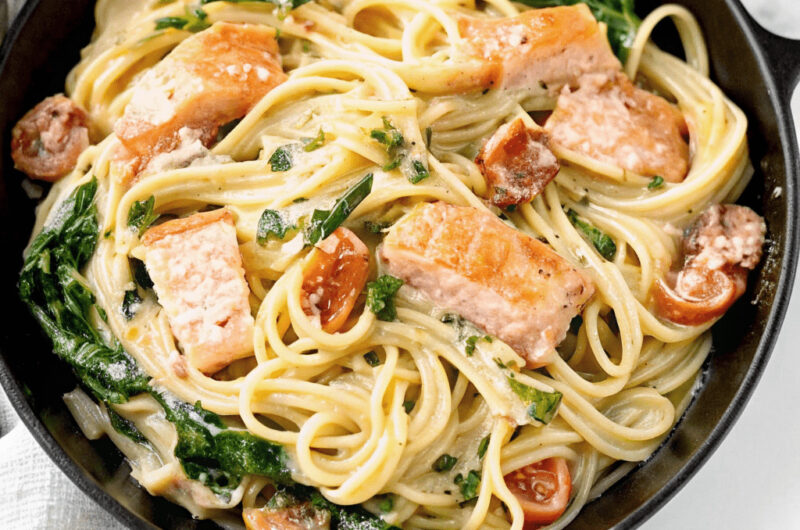
Creamy Salmon Pasta
Course: Main DishCuisine: ItalianDifficulty: Easy4
servings10
minutes20
minutes520
kcal30
minutesCreamy Salmon Pasta is a quick and comforting meal made with tender salmon, pasta, and a smooth creamy sauce. It’s easy to cook, kid-friendly, and perfect for a cozy lunch or dinner.
Ingredients
Pasta such as fettuccine, penne, or spaghetti
Fresh salmon fillets skinless is easiest
Olive oil or butter
Garlic cloves, minced
Heavy cream or cooking cream
Grated Parmesan cheese
Salt
Black pepper
Dried or fresh herbs like parsley or dill
Optional vegetables spinach, peas, or broccoli
Directions
- Start by bringing a large pot of water to a boil. Add a pinch of salt to the water, then cook the pasta according to the package instructions. Stir the pasta once or twice so it doesn’t stick together. When the pasta is cooked until tender, drain it in a colander and set it aside. Try to save a small cup of the pasta water, as it can help thin the sauce later if needed.
- While the pasta is cooking, prepare the salmon. Cut the salmon into medium-sized pieces so they cook evenly. Heat olive oil or butter in a large skillet over medium heat. Carefully place the salmon pieces in the pan and cook them gently, turning once, until they are lightly golden on the outside and flaky on the inside. This usually takes just a few minutes per side. Once cooked, remove the salmon from the pan and set it aside on a plate.
- In the same skillet, add a little more butter or oil if needed, then add the minced garlic. Cook the garlic for a short time, stirring often, until it smells fragrant but not burned. Slowly pour in the cream and stir gently. Let the sauce simmer for a few minutes so it thickens slightly and becomes smooth.
- Next, add the grated Parmesan cheese to the sauce. Stir until the cheese melts completely, making the sauce creamy and rich. Season with salt and black pepper. If the sauce feels too thick, add a splash of the reserved pasta water and stir until it reaches the consistency you like.
- Now, gently return the cooked salmon to the skillet. Add the drained pasta and toss everything together carefully so the salmon stays in chunks and doesn’t break apart too much. If you’re using vegetables like spinach or peas, add them now and cook for another minute or two until they’re tender.
- Finally, sprinkle fresh herbs over the top and give everything one last gentle stir. Taste and adjust the seasoning if needed. Your Creamy Salmon Pasta is now ready to serve warm and enjoy.
Notes
- Pat the salmon dry before cooking so it browns nicely instead of steaming.
- Cook pasta just until al dente so it doesn’t become mushy in the sauce.
- Cook the salmon on medium heat to keep it soft and juicy.
- Cook garlic gently and never let it burn, as burnt garlic tastes bitter.
You can add this post to your favorite Pinterest board!